



By Skyweb.al
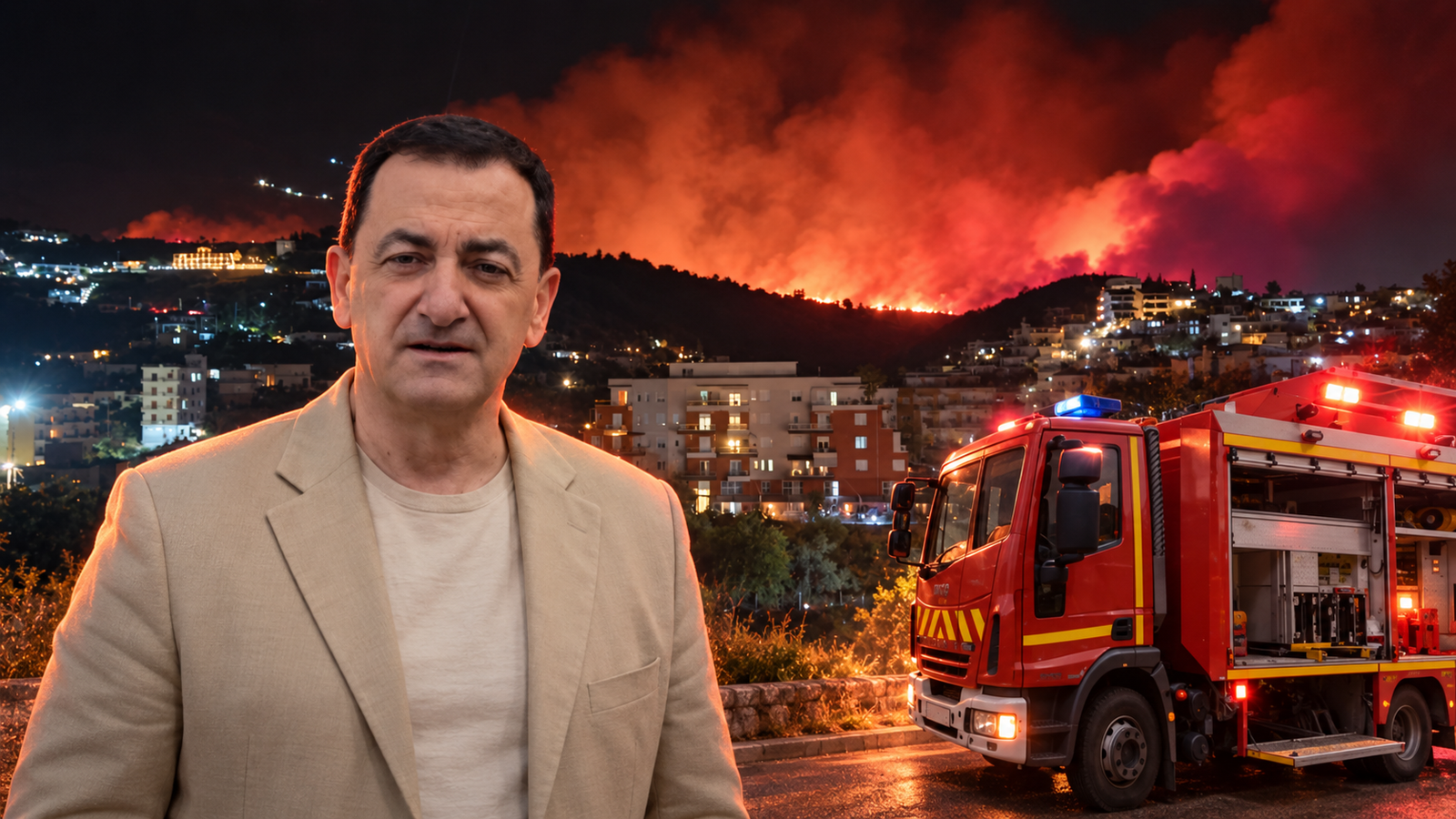
In the early hours of September 5, after the flames threatened dozens of homes and forced residents and tourists to flee, two questions loom over Himara: Who caused the fire and what will happen to the burned lands?

In March, the government declared 18 areas of Himara as priority territories for the development of the mountain economy. The decision includes Palasë, Dhërmi, Vuno, Himara, Pilur, Kudhës, Qeparo, Borsh, Piqeras, Lukovë, Nivica, Vranisht, and other areas where economic, industrial, and tourist activities are permitted. The Himarë–Pilur area alone covers 2,211 hectares.
The September 4 fire spread precisely in the hills east of the town, near the “1 May” neighborhood, the bypass, and toward the Pilur area. This territory partially coincides with zones no. 5 and no. 6 of the “Mountains Package,” which include Himara and Pilur.
Of course, this is proof that the fire was set intentionally, but it is reason enough for the authorities to publish the initial focus, the path of the flames’ spread, and an official overlay of the burned perimeter onto the “Mountain Package” maps.
Only in this way can the question be answered: what will grow or be built tomorrow on the land that burned today?
The Law “On Forests” prohibits changing the land use of burned areas that are part of the national forest fund. This means that any future attempt to turn these territories into construction sites must face strict public and legal oversight. That’s what the law says, but we have often seen in this country that it’s “Maliqi” who decides. Do you remember how a 5-story building was built without a permit a few weeks ago in Himara and everyone acted like they were seeing it for the first time?!
Almost 1 million euros in firefighting equipment!
Alongside doubts about the burned area, the fire also exposed the financial priorities of the Himarë Municipality.
Public data reviewed by Skyweb.al shows that during 2026 nearly 1 million euros are planned for cultural activities, promotional events, concerts, and shows.
The tender for “Organizing Year-Round Artistic and Cultural Activities” alone had a budget cap of 49.5 million lek without VAT, or over 516,000 euros. The program includes 23 activities, among them festivals, concerts, the “Ice Cream Festival,” the “Balloons Festival,” “Drone Art,” “Disney Land,” 3D cinema, and end-of-year celebrations.
Over 10.2 million lekë, or more than 100,000 euros, were allocated for two procedures related to the opening of the tourist season. Tenders and other promotional activities bring the planned bill close to 1 million euros.
Meanwhile, to fight the fire, vehicles and personnel were dispatched to Himara from Tirana, Fier, Vlora, Tepelena, Finiqi, Delvina, Saranda, Gjirokastra, and Dropulli. About 460 people were involved in the operation, while Himara relied heavily on other municipalities and the Armed Forces.
For comparison, a fire truck purchased by the Dibër Municipality in 2025 had a budget limit of around 9.2 million lek, while a specialized forest fire truck tendered by the Tirana Municipality costs about 313,000 euros.
So, with nearly €1 million, several firefighting vehicles could have been procured, including vehicles adapted for Himara’s difficult terrain.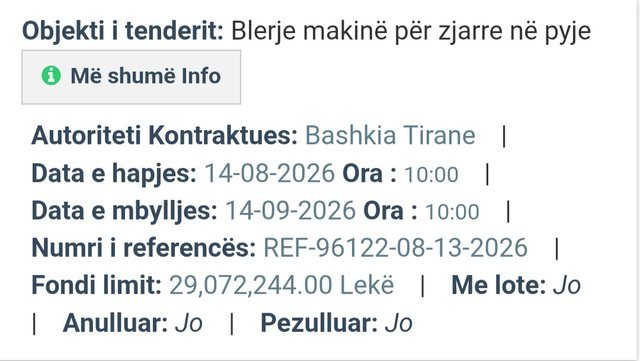
According to an analysis by “Kapitali” of procurement, the municipality has planned around €130 million in tenders for 2026. With fewer than 9,000 residents, its budget amounts to about €10,000 per person, nearly ten times that of Tirana.
No one is saying that Himara shouldn’t have concerts, festivals, or tourism promotion. But in a territory that burns almost every summer, fire protection cannot be limited to backpack pumps and calls for help from neighboring municipalities, especially with a budget like the one managed by Vagjel Tavo, which is even larger than that of many ministries.
Because after the Himara fire, it’s not enough to just ask who started it, but also why one of the richest municipalities needed firefighters from half the country to rush to its rescue. /skyweb.al