



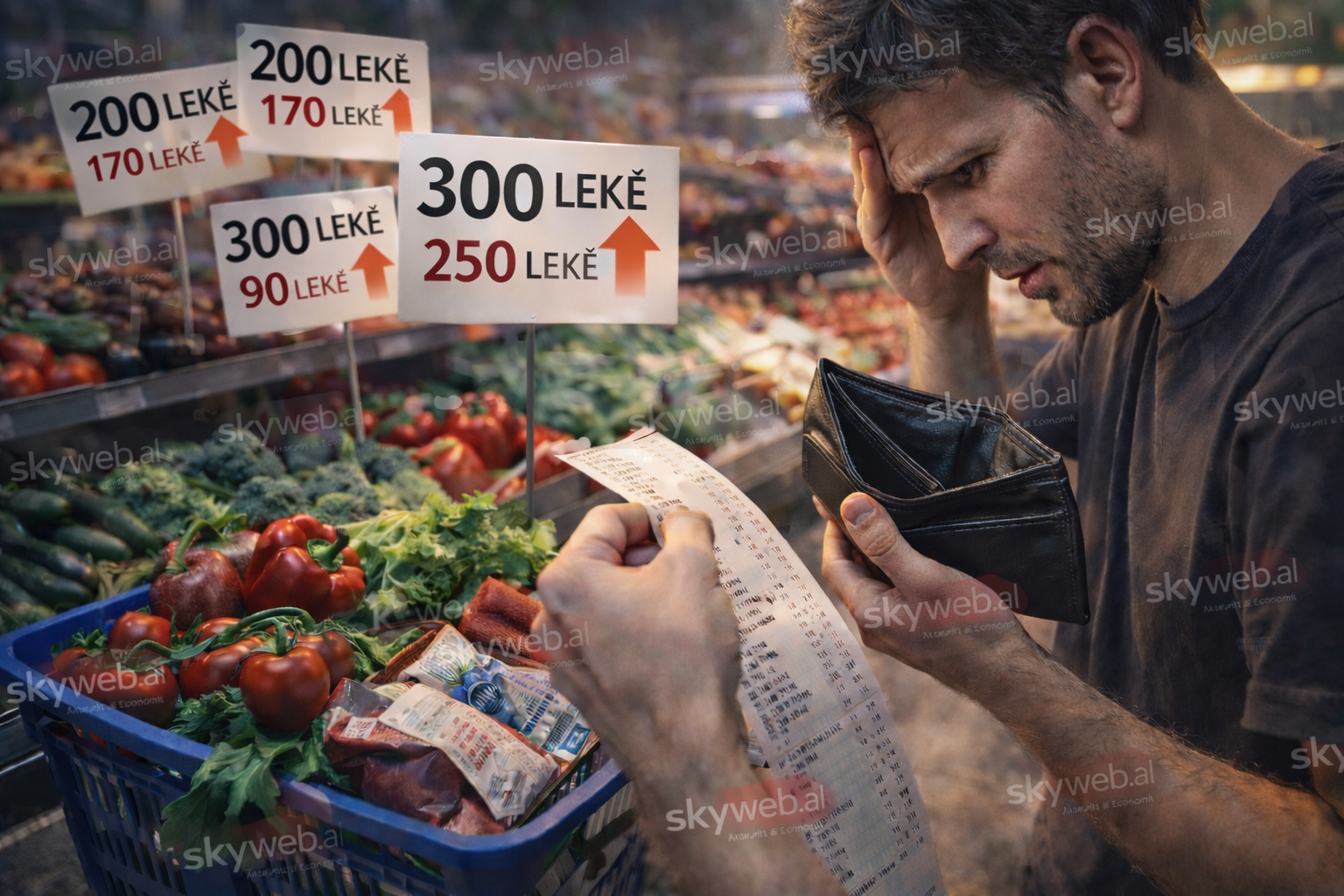
The ongoing strengthening of the lek against the euro should have been good news for the pockets of Albanian consumers, especially for food prices, a significant portion of which is imported.
But as the euro continues to weaken and the government has taken initiatives to spur price cuts, the opposite is happening in the market: food prices are rising even further.
The latest data from INSTAT show that during October 2026, prices of food and non-alcoholic beverages rose by 1.2% in just one month, while compared to October of last year, the increase reached 4%.
At the same time, overall inflation accelerated from 2.9% in September to 3.4% in October, the highest level since January 2024. Food was the main contributor to this increase, accounting for 1.36 percentage points of the annual inflation.
The paradox becomes even more apparent when looking at the exchange rate’s performance. According to the Bank of Albania, on November 13 the euro was exchanged at 90.71 lek, continuing its depreciation against the domestic currency.
In an economy like Albania’s, where a significant portion of food and consumer products comes from abroad, the strengthening of the lek should create conditions for reducing import costs, at least for goods purchased in euros.
To understand the weight of imports, it is enough to refer to foreign trade statistics.
According to INSTAT, in 2025 Albania imported about 162.2 billion lek in food, beverages, and tobacco, while exports in this category were only 55.9 billion lek.
Thus, the value of imports was almost three times that of exports, demonstrating the importance of foreign supplies for the domestic market.
Under these conditions, a weaker euro allows importers to pay fewer lek for the same invoice in the European currency, provided the supply price remains unchanged.
However, this potential benefit is not showing up in the overall trend of food prices. This raises serious questions about how the reduction in import costs is transmitted along the supply chain, from importers to distributors and ultimately to supermarkets.
“Price Mirror,” announced discounts, and market reality
Another element that heightens this contrast is the government’s initiative to monitor and compare prices.
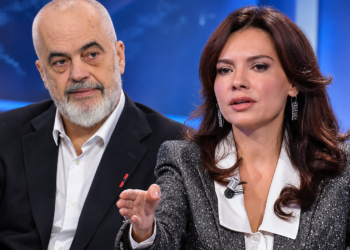
On October 12, 2026, Prime Minister Edi Rama introduced the “Price Mirror” platform and the “KURSE” initiative, aiming to increase market transparency and give consumers the opportunity to buy more cheaply.
At the official presentation, the government announced price comparisons for 238 products across 13 categories, while the “KURSE” initiative included 325 offers with an average discount of 13.3%, which for certain products reached up to 40%.
But INSTAT data for October show a different reality for the market as a whole. Precisely in the month these mechanisms began operating, food prices rose by 1.2% compared to September.
Of course, the platform was introduced in the middle of the month, and the results of just one month are not enough to definitively assess its effectiveness. Also, publishing offers and comparing prices are not the same as setting maximum prices in the market.
However, the figures show that the advertised discounts on certain products did not translate, at least during October, into an overall reduction in the food basket.
This raises a fundamental question about the effectiveness of the policies implemented: Are temporary offers and price transparency sufficient to curb price increases, or are further interventions needed to promote competition and reduce real supply costs?
The problem becomes even more acute when you consider that food and non-alcoholic beverages account for 34.1% of the basket used by INSTAT to measure inflation.
This means that any increase in food prices has a significant impact on the cost of living, especially for low-income families. /skyweb.al