



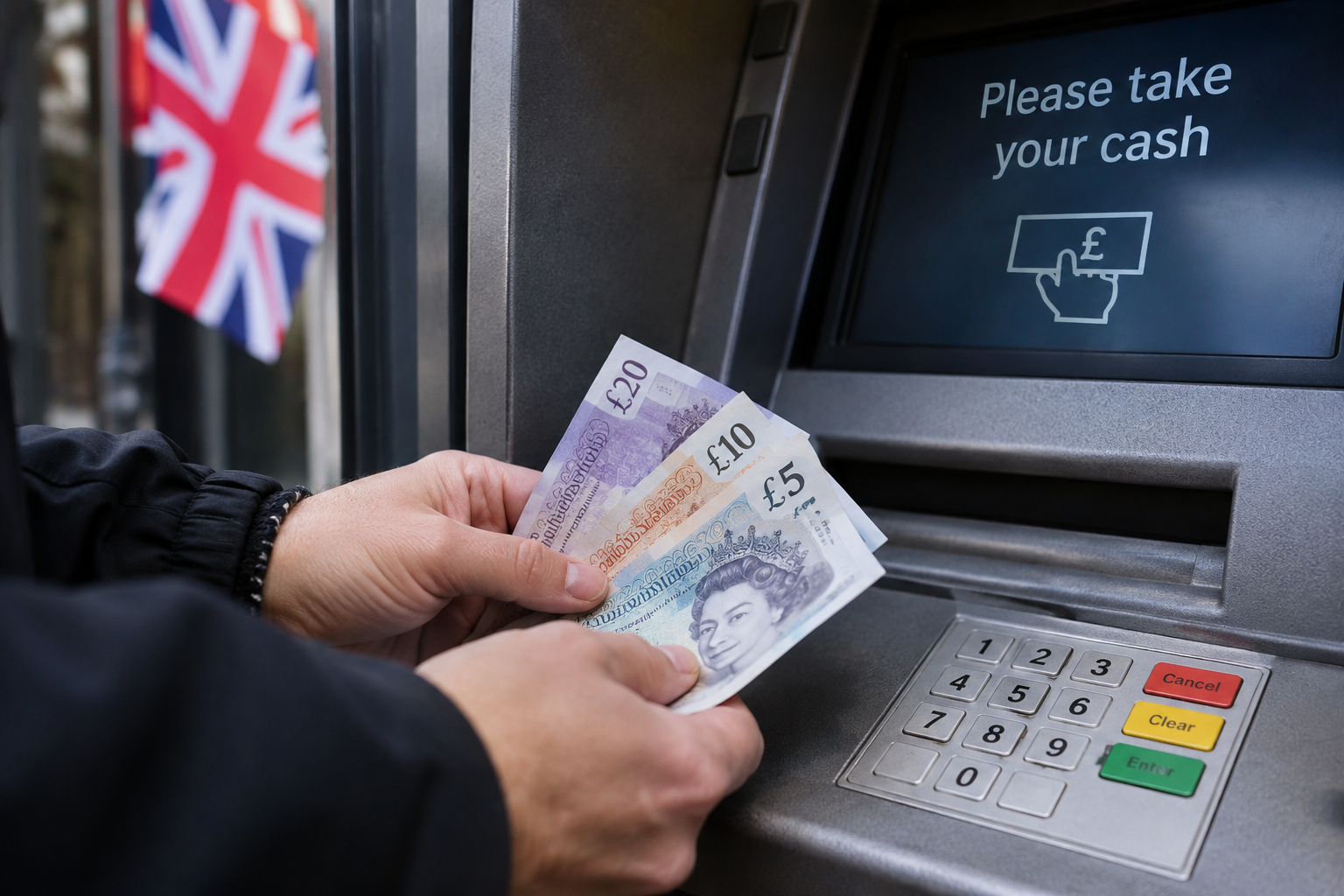
Britons have withdrawn around £700 million more than usual from the banking system over the past five weeks, while increasing purchases of long-shelf-life foods, bottled water, and other products needed to cope with emergency situations.
According to Bank of England data published by Bloomberg, the total amount of physical cash in circulation has risen by £1.5 billion since October 22, when Security Minister Dan Jarvis urged citizens to stock up on supplies for at least three days.
As part of the government’s campaign “Be Ready,” British authorities recommend that families keep at home food, water, hand-cranked radios, as well as cash in bills and coins, to cope with the possible consequences of cyberattacks, power outages, or extreme weather events.
Withdrawals over the past five weeks have been about twice as high compared to the same period three years ago. Since the beginning of this century, larger withdrawals during this time of year have been recorded only in 2009, during the global financial crisis.
Parallel to this, official retail sales statistics show a significant increase in purchases of canned foods and long-shelf-life milk. Data from Worldpanel by Numerator also highlight a rise in purchases of bottled water and disinfectants.
The Governor of the Bank of England, Andrew Bailey, had highlighted this phenomenon as early as November, describing the increase in the amount of physical cash in circulation as one of the paradoxes of central banks, at a time when most payments are made electronically.
The amount of physical cash in circulation has increased by 1.5% in five weeks, marking the largest increase since 2014.
The Bank of England has not commented on the specific reasons for the increase in demand for physical cash, but previous studies by the institution show that citizens are holding more and more money outside the banking system to protect themselves from power outages or the malfunction of electronic payment systems.
Microsoft’s technological problems in early November, which lasted for nearly 24 hours globally, may have added to citizens’ concerns about dependence on electronic systems.
The increased use of physical cash may also be linked to economic difficulties and the expansion of the informal economy, where cash transactions are used to evade tax obligations. /skyweb.al