



Albania is facing a demographic crisis that is increasingly affecting Tirana, the county that for years has offset the decline in births in the rest of the country. The latest data from INSTAT show that the number of babies being born is decreasing, while in most counties deaths now exceed births.
The biggest concern is that even Tirana, which has benefited from population migration from other cities, is also registering a significant decline in births.
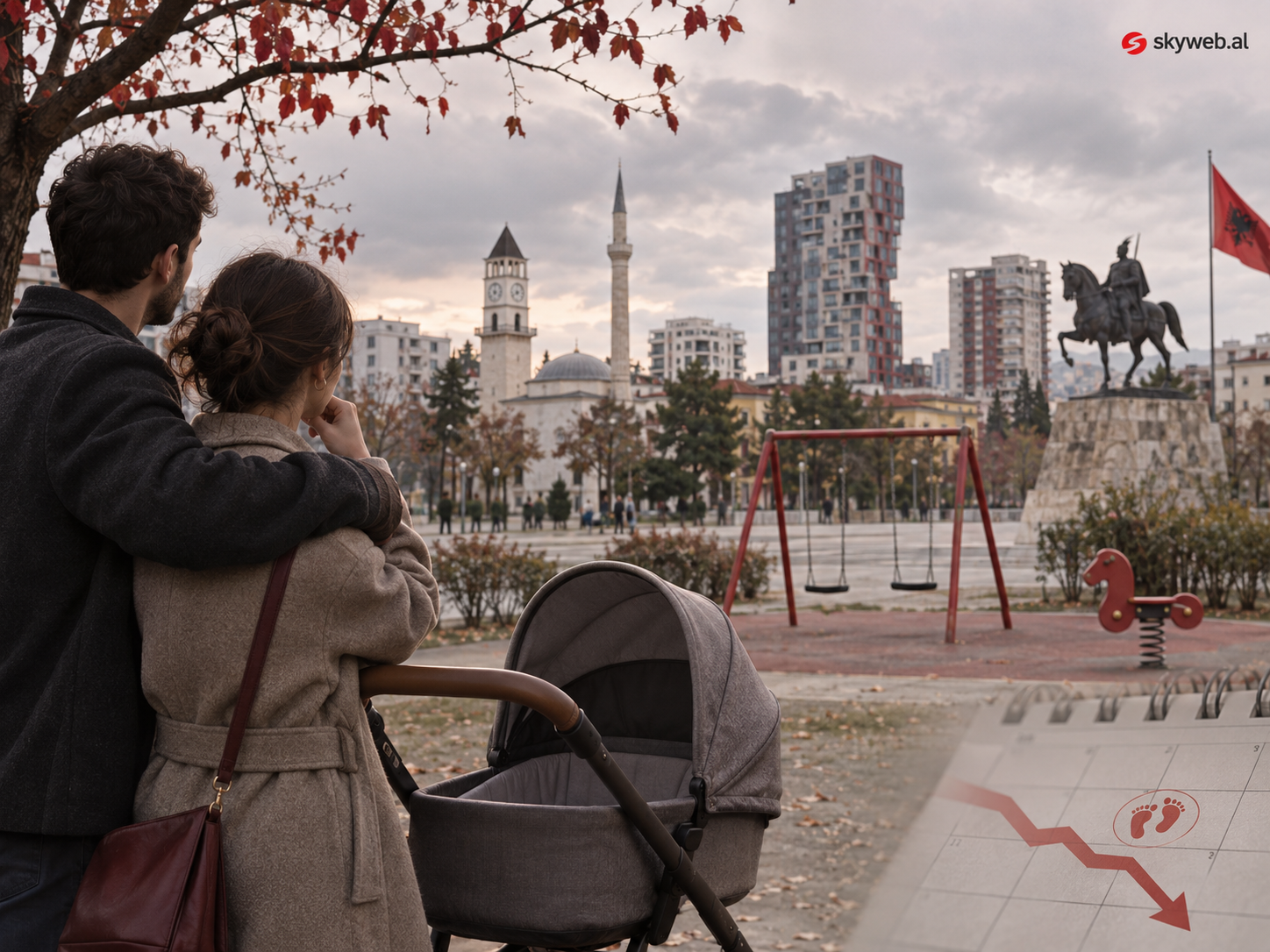
During the first nine months of 2026, the Tirana district recorded 7,456 births, down from 8,103 in the same period a year earlier. This represents 647 fewer babies, or a decline of about 8%.
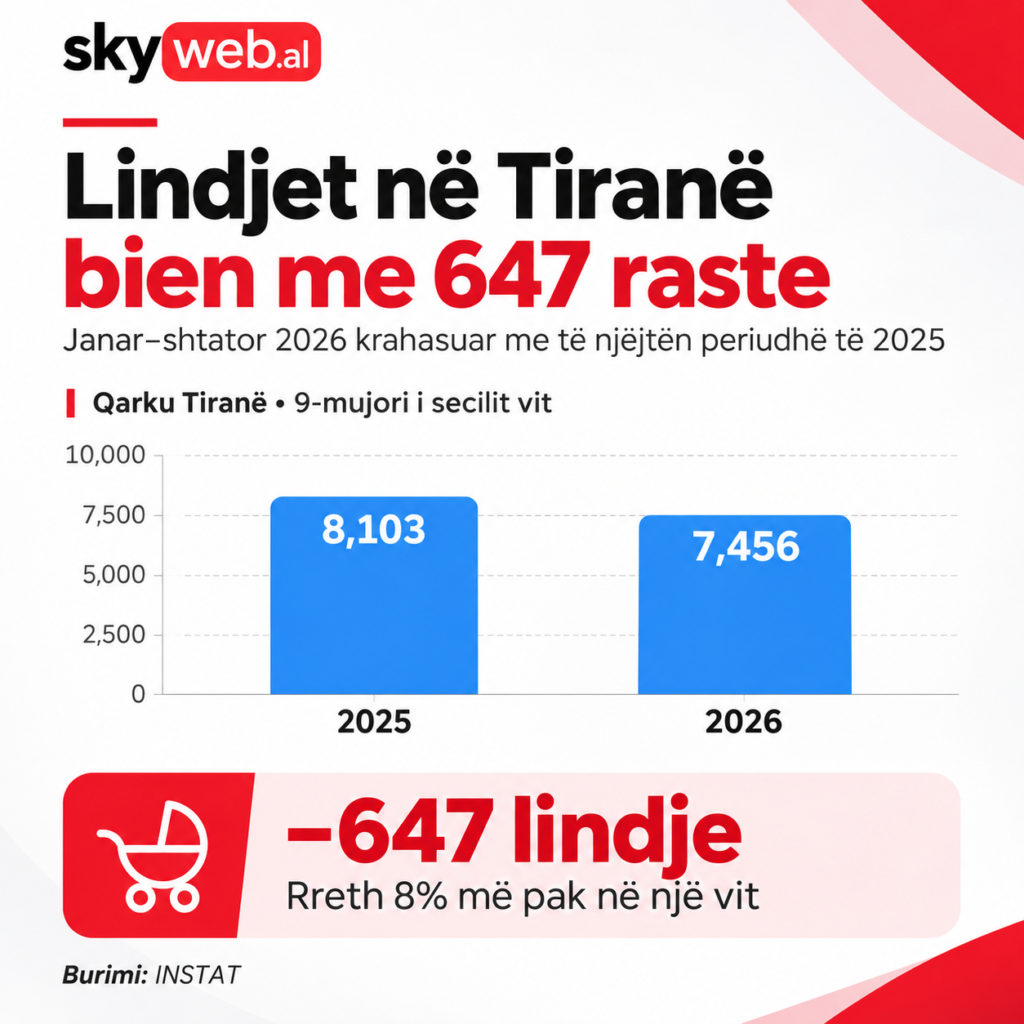
The decline in the capital is almost double the national average of about 4.7% for the nine-month period, indicating that neither population concentration nor greater employment opportunities are protecting Tirana from the contraction in birth numbers.
The situation becomes even more alarming when you consider that Tirana accounts for almost half of all births in Albania. In the July–September 2026 quarter alone, this county recorded 2,708 births, or 46.8% of the national total.
One possible explanation is linked to the ever-increasing cost of living, especially apartment prices, rents, and expenses for raising children. However, the demographic report does not specify the reasons for the decline in births, and this requires separate economic and social analyses.
Albania with fewer and fewer births
According to the INSTAT report for the third quarter of 2026, 5,787 births were registered across Albania, marking a 10.5% decrease compared to the same period in 2025.
At the same time, the number of deaths reached 5,045, with a slight increase of 0.4% compared to a year earlier.
As a result, the natural increase in the population was only 742 people, a relatively small difference between the number of births and deaths.
But behind this positive national balance lies a much more problematic reality.
Of Albania’s 12 counties, in seven of them the number of people who died was higher than the number of babies born. Only five counties recorded a positive natural increase.
Tirana is the district that carries the main weight of the national positive balance, with 1,380 more births than deaths during the third quarter.
If the Tirana district is excluded from the national calculation, the other 11 districts combined recorded 638 more deaths than births in just three months.
This shows that the country’s positive natural increase is decisively supported by the capital, even though Tirana itself has begun to register a decline in births in the nine-month comparison.
Gjirokastra with only 66 births, Fier with the sharpest decline
The differences between counties are large. Gjirokastra recorded the lowest number of births in the country, with only 66 babies during the July–September 2026 period.
This means that across the entire Gjirokastra district, an average of fewer than one child was born per day. On the other hand, Korça recorded the most negative natural balance, with 220 more deaths than births.
Compared with the same quarter of last year, ten of the country’s 12 counties recorded a decline in births. The most pronounced drop was in Fier, where the number of births fell by 20.1%.
Only two counties recorded an increase, while Dibër registered the highest increase, at 3.9%.
Death rates also show significant differences. Kukës recorded the largest percentage increase, at 15.7%, while Dibër had the steepest decline, at 17.8%.
These data show an increasingly unequal distribution of demographic developments, with a large part of the territory facing a negative natural balance.
Can the Baby Bonus solve the demographic crisis?
In the face of this situation, one of the main financial support instruments for births in Albania remains the Baby Bonus, implemented since 2019.
Under the current scheme, families receive 40,000 lekë for the first child, 80,000 lekë for the second, and 120,000 lekë for the third child and beyond, in accordance with the legal eligibility requirements.
However, despite the implementation of this scheme for several years, the number of births in Albania continues to decline.
For 2027, the government has proposed revising the Baby Bonus, providing monthly support for low-income families with children up to five years old. According to statements by the Ministry of Health and Social Welfare, the new scheme is set to begin on July 1, 2027.
The change would shift part of the support from the immediate postpartum payment toward more ongoing assistance for the families receiving it.
But international experience suggests that financial payments, taken alone, have limited impact on boosting fertility.
According to analyses by the OECD and the United Nations, policies aimed at increasing births also require affordable child care services, parental leave, economic security, employment opportunities, and better housing conditions.
A payment of 40,000 or 80,000 lekë may ease some of a family’s initial expenses, but it does not cover the multi-year costs of food, health care, daycare, preschool, schooling, and housing.
Furthermore, Albania also faces emigration and the departure of young people, factors that affect the size and structure of the population of reproductive age.
For this very reason, the demographic problem cannot be assessed solely by the number of births and deaths. To understand the real change in the population, emigration, immigration, and population aging must also be taken into account.
The latest data from INSTAT raise an increasingly important question for public policy: is financial support after birth sufficient when the economic and social difficulties families face span many years?
The decline in births in Tirana, along with a negative natural balance in most counties, shows that the demographic challenge is no longer confined to remote areas or cities that have lost population.
It is also appearing in the country’s largest economic center, making long-term support for families, housing, and the prospects of young people issues of direct importance to the demographic future of Albania. /skyweb.al