



The six Western Balkan economies cannot change their size, but they can change the size of the market in which they operate. To do this, they must overcome political disagreements and accelerate economic integration.
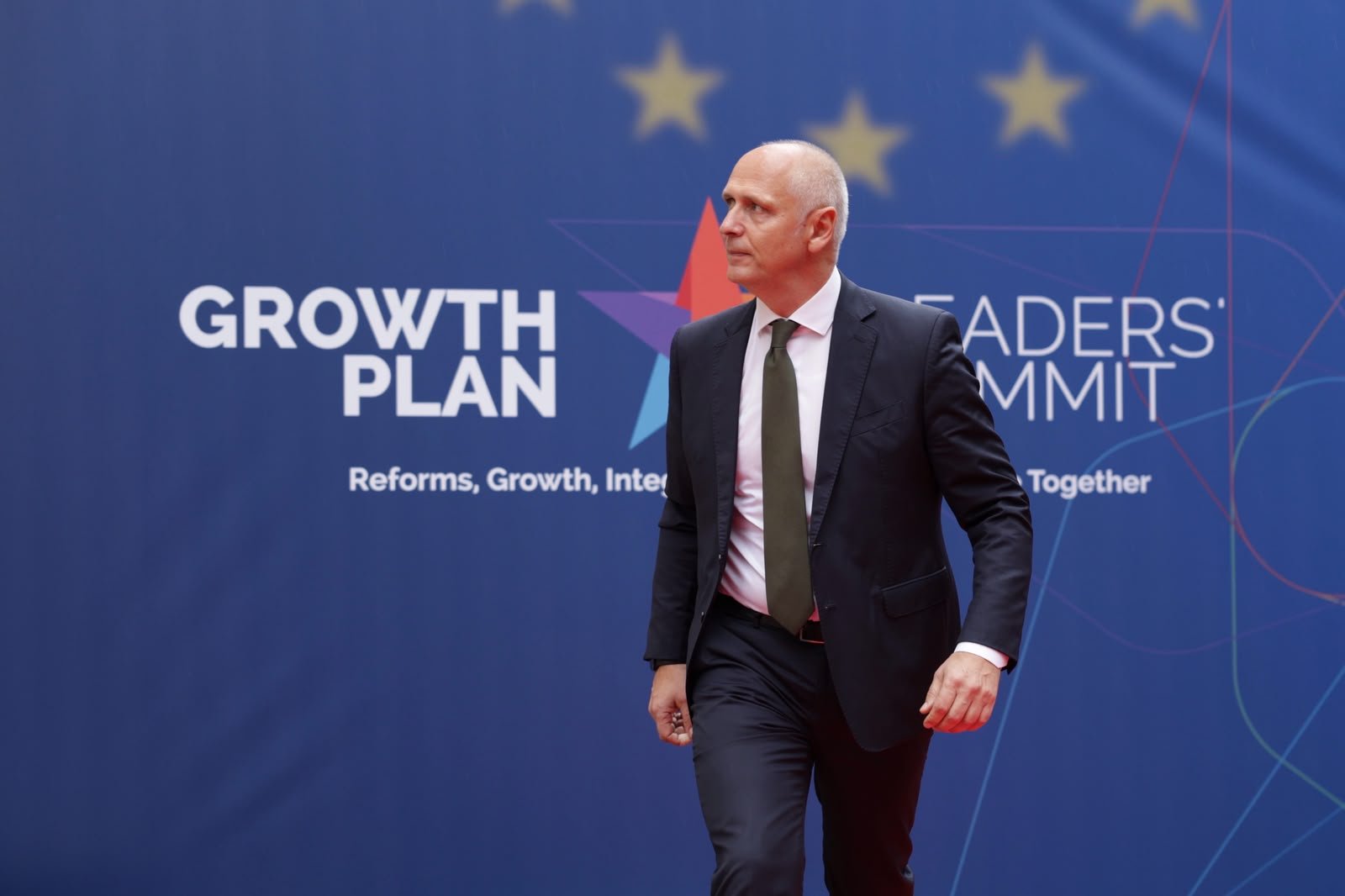
This was the message of the Secretary General of the Regional Cooperation Council (RCC), Amer Kapetanović, at the Leaders’ Summit on the EU Growth Plan, held today in Tirana, with the participation of European Commissioner for Enlargement, Marta Kos.

“In a world that has become more difficult for small economies, the six of us can still choose not to remain small. This is precisely what this market is for, and the RCC will see this work through to the end together with you,” stated Kapetanović.
When the economy moves and politics holds it back
The benefits of regional cooperation are already tangible. Since 2021, citizens of the six Western Balkan economies have been communicating at domestic phone rates throughout the region. Four economies have joined the Single Euro Payments Area (SEPA), significantly reducing the costs of international transfers.
However, administrative barriers, restrictions on service provision, and regulatory differences continue to hinder businesses.
“We made progress more quickly where the benefits were visible, the work remained at a technical level, and the expected outcome was clear. We stalled where technical issues became entangled in broader disputes,” said Kapetanović.
According to the findings of the Balkan Barometer, citizens increasingly value regional cooperation, but they expect concrete results, especially in the face of the high cost of living and economic uncertainty.
Time for implementation
With the final year of the EU Instrument for Reform and Growth approaching and the Regional Common Market Action Plan 2025-2028 nearing the mid-point of its implementation period, Kapetanović called for concrete deadlines, political will, and a willingness to compromise.
The Regional Common Market, coordinated by the RCC, is one of the pillars of the EU’s Growth Plan. While domestic reforms prepare the region’s economies for entry into the European Single Market, regional integration gives businesses the opportunity to grow and become more competitive.
32 investment opportunities in the region
The Tirana Summit was preceded by several high-level meetings. The RCC presented a new regional instrument for tourism development, while at the EU-Western Balkans investment conference “New Frontier,” Kapetanović presented a portfolio of 32 investment opportunities in the region.
The leaders of the Western Balkans praised the progress made and the coordinating role of the RCC, emphasizing the need to overcome the remaining obstacles.
The challenge now is to translate the commitments made at the summit tables into fewer obstacles for businesses, lower costs for citizens, and more economic opportunities for the entire region.