



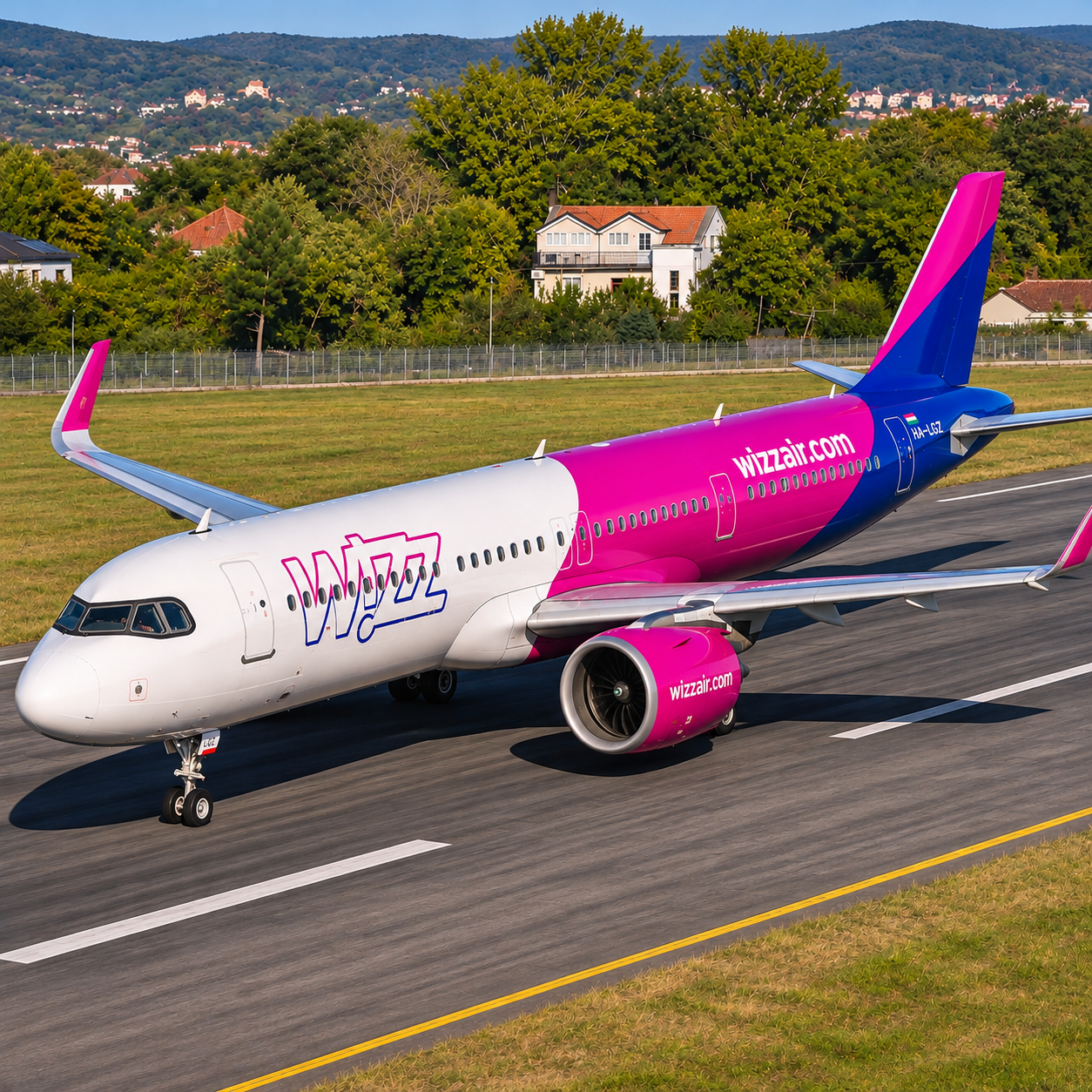
According to the latest financial report, at the end of September 2026, Wizz Air had 199 A321neo aircraft and 10 A321XLR aircraft, and had ordered another 234 A321neo aircraft.
A portion of this fleet is also based at Tirana International Airport. Currently, 14 Airbus A321neo aircraft operate from Wizz Air’s base at TIA, while TIA has announced that in the summer of 2027 it will permanently expand the fleet at Rinas to 15 A321neo aircraft, making Tirana Wizz Air’s sixth-largest base in its network.
But why is the Hungarian company investing so much in this particular model?
The Airbus A321neo has a significant capacity advantage compared to its American competitors, the Boeing 737 MAX 8 and MAX 9.
While the A321neo can carry up to 244 passengers, the Boeing 737 MAX 8 seats up to 210 passengers and the MAX 9 up to 220.
Wizz Air has configured its A321neo aircraft with 239 seats, carrying about 14% more passengers than the MAX 8’s maximum capacity and 9% more than the MAX 9’s.
This advantage is particularly important for low-cost carriers, as it allows the costs of a flight to be spread across a larger number of passengers, reducing the cost for each of them.
According to Airbus, the A321neo reduces fuel consumption and carbon dioxide emissions per passenger by 20% compared to the previous generation.
Focusing on a single aircraft family also reduces maintenance costs, pilot training expenses, and spare parts management.
With an average age of just 4.6 years, Wizz Air has, according to the company, the youngest fleet among major European airlines.
By March 2033, the company aims to have 368 A321neo and 11 A321XLR aircraft, which together are expected to make up about 99% of its fleet. /skyweb.al